
When I first considered updating my kitchen, I faced the same dilemma many homeowners do: full cabinet replacement or refacing. Custom cabinets can cost up to $1,200 per linear foot, while even stock options often range between $80 and $250 per foot—a major investment either way.
Over years of hands-on remodeling projects, I’ve seen how worn cabinet fronts, dated finishes, and tired hardware can drag down an otherwise functional kitchen. In many cases, the cabinet boxes themselves were still strong—making full replacement unnecessary.
Cabinet refacing offers a smarter alternative. Instead of tearing everything out, refacing upgrades what you see and touch every day. The result is a kitchen that feels new, modern, and intentional—without the cost, waste, or disruption of a full remodel.
Insights in this guide are based on hands-on cabinet installation projects and real-world kitchen remodeling experience across multiple residential renovations.
Kitchen Cabinet Refacing: Start to Finish- Quick Answer:
Kitchen cabinet refacing refreshes your kitchen by replacing doors, drawer fronts, veneers, and hardware while keeping existing cabinet boxes—cutting costs by 30–50% compared to full replacement when cabinets are structurally sound.
Ultra-Fast Takeaway:
Kitchen cabinet refacing updates doors, drawer fronts, veneers, and hardware while keeping existing cabinet boxes—cutting costs by 30–50% compared to full replacement when cabinets are structurally sound.
What is Kitchen Cabinet Refacing?
Kitchen cabinet refacing is the process of upgrading the exterior surfaces of existing cabinets while keeping the original cabinet boxes intact.
This typically includes:
-
Replacing cabinet doors and drawer fronts
-
Applying veneer or laminate to exposed cabinet frames
-
Installing new hinges, pulls, and handles
From my experience, refacing works best when cabinet boxes are still square, solid, and well-built. You preserve the structure while achieving a completely refreshed appearance.
How Does Cabinet Refacing Work?
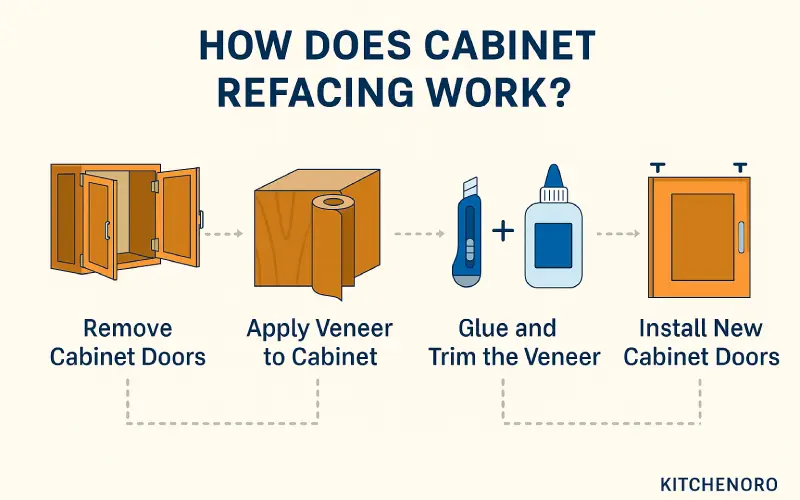
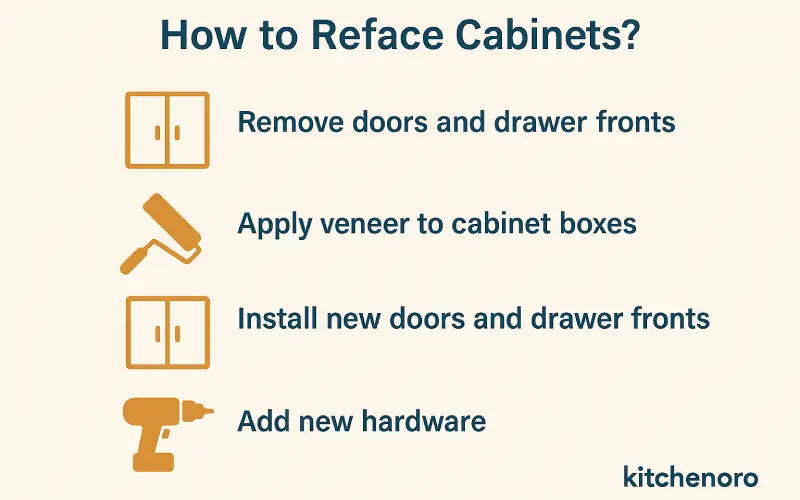
Cabinet refacing requires precision and careful preparation. Thin veneer strips—made from laminate or real wood—are applied to cabinet face frames, sides, and exposed edges.
The process generally follows these steps:
-
Surfaces are cleaned and lightly sanded
-
Adhesive-backed or glued veneer is applied and heat-set
-
Excess material is trimmed for a seamless fit
-
New doors and drawer fronts are installed
When done correctly, refaced cabinets often look factory-finished and are nearly indistinguishable from brand-new cabinetry.
When is Cabinet Refacing a Good Choice?
Before recommending refacing, I always evaluate the condition of the existing cabinets. Refacing delivers excellent results when:
-
Cabinet boxes are made from plywood or quality MDF
-
Frames and sides are smooth and undamaged
-
Drawer slides and internal hardware function properly
-
The existing kitchen layout already works well
If these conditions are met, cabinet refacing can be one of the smartest and most cost-effective upgrades you can make.
Who Should NOT Reface Cabinets?
Cabinet refacing is not suitable for every kitchen. You should avoid refacing if:
-
Cabinet boxes are warped, swollen, or water-damaged
-
Interior storage is inefficient or outdated
-
You plan to significantly change the kitchen layout
-
Drawers and shelves no longer operate smoothly
-
Structural repairs would approach replacement costs
In these situations, full cabinet replacement provides better long-term value.
Cost of Cabinet Refacing
Cabinet refacing typically costs 30–50% less than cabinet replacement, but pricing varies based on kitchen size, materials, and labor.
Average Cost Breakdown
| Type | Price Range | Details |
|---|---|---|
| DIY Refacing | $1,000–$4,000 | Veneer kits, tools, hardware |
| Professional Refacing | $4,500–$13,000 | Labor, doors, veneer, hardware |
| Laminate Veneer | $100–$200 / linear ft | Budget-friendly option |
| Real Wood Veneer | ~$455 / linear ft | Premium materials |
Not sure if your cabinets are good candidates for refacing?
A professional cabinet inspection can quickly determine whether refacing will deliver long-term value—or if replacement makes more sense.
Pros and Cons of Cabinet Refacing
Pros of Cabinet Refacing
-
30–50% lower cost than replacement
-
Faster installation (typically 3–5 days)
-
Minimal disruption with no major demolition
-
Eco-friendly—less waste sent to landfills
-
Wide range of styles, colors, and finishes
Cons of Cabinet Refacing
-
Only works if cabinet boxes are structurally sound
-
No major layout or storage changes
-
Can still be costly in large kitchens
-
Won’t fix deep structural or design flaws
How to Reface Cabinets? (Step-by-Step)
Tools and Preparation
You’ll need screwdrivers, measuring tools, utility knives, rollers, clamps, sandpaper, and adhesives. Precision is critical—especially for door alignment.
Cleaning and Measuring
Degrease all cabinet surfaces thoroughly. Measure carefully and cut the veneer slightly oversized to allow for trimming.
Applying Veneer and Panels
Apply adhesive evenly, press veneer slowly to avoid bubbles, and trim edges flush. Use jigs for consistent hardware placement.
Finishing Touches
Sand edges smooth, fill holes, and paint or stain as desired. Installing new hardware completes the transformation.
DIY vs Hiring Professionals
The DIY Route
DIY refacing can save money and feel rewarding, but mistakes in adhesive application, trimming, or alignment can permanently affect appearance and durability.
The Professional Route
Professionals use specialized tools and proven techniques to deliver consistent, long-lasting results. In my experience, professionally refaced cabinets typically look cleaner and last longer.
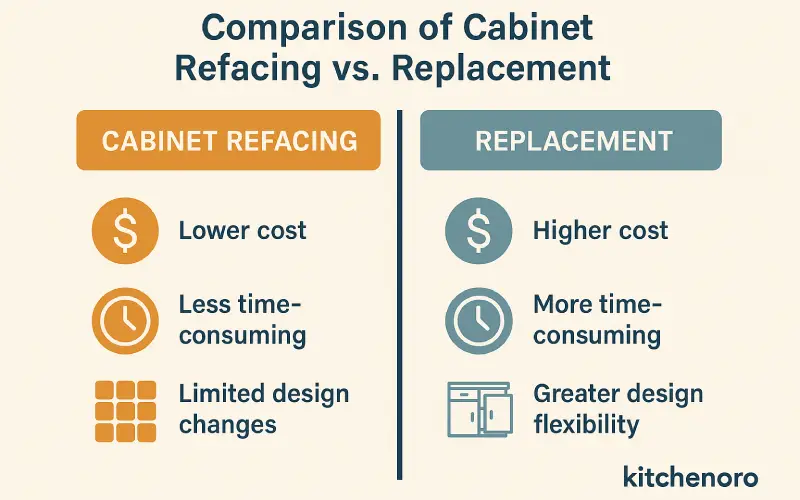
Cabinet Refacing vs Replacement — At a Glance
| Feature | Refacing | Replacement |
|---|---|---|
| Cost | Lower | Higher |
| Time | 3–5 days | 2–6 weeks |
| Layout Changes | No | Yes |
| Eco-Friendly | Yes | Less |
| Structural Fixes | No | Yes |
Cabinet Refacing vs. Refinishing
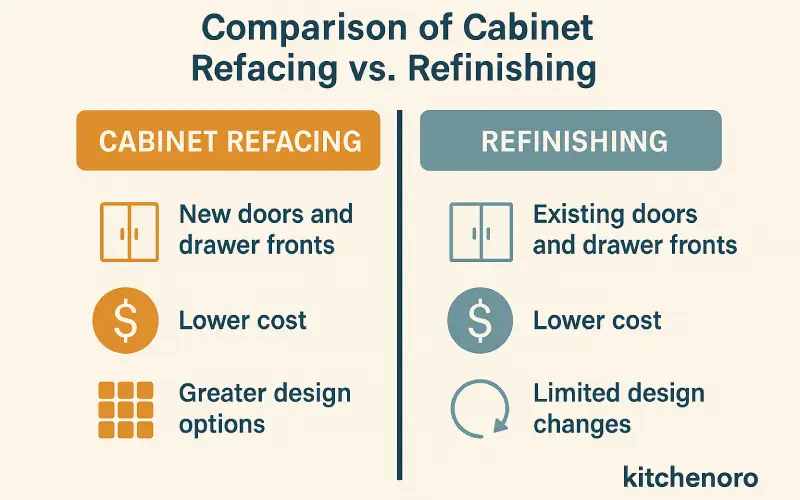
Refinishing involves painting or staining existing cabinets without replacing doors or veneers. It’s more affordable but offers a less dramatic transformation.
Refacing, by contrast, changes the entire exterior, making cabinets feel truly new.
Is Cabinet Refacing Worth It?
Cabinet refacing is absolutely worth it when:
-
Cabinet boxes are structurally sound
-
The kitchen layout already works
-
You want a fast, affordable visual upgrade
If you need layout changes or structural repairs, replacement is the better investment.
FAQs
1) Is it worth it to reface kitchen cabinets?
Yes. When cabinet boxes are solid, refacing delivers a refreshed look at significantly lower cost than replacement.
2) What is Kitchen Cabinet Refacing?
In my own kitchen, I saw how the process of cabinet refacing works by simply upgrading the exterior surfaces. This method involves replacing old doors, drawer fronts, and hardware, then applying veneers or laminates to the visible boxes, keeping the existing framework intact while giving the cabinets a fresh look.
3) How much does it usually cost to reface kitchen cabinets?
From my experience, a full cabinet refacing can transform kitchens without major remodeling. You should expect to spend around $5,000 to $10,000 for smaller cabinets, while an average kitchen falls in the range of $8,000-$12,000. For large cabinets, especially with islands or peninsulas, costs can go up to $10,000-$15,000.
4) What are the downsides of refacing?
The biggest downside of cabinet refacing is its limited ability for structural changes. If you’re looking to make major adjustments in your kitchen layout—like adding an extra cabinet, relocating the sink, or installing a kitchen island—you’ll likely need a full cabinet replacement. Refacing offers a fresh look at lower cost, but it is only surface-level and won’t go far with bigger upgrades.
Conclusion
Kitchen cabinet refacing is a cost-effective, eco-friendly solution for homeowners who want a modern kitchen without the expense and disruption of full replacement. When cabinet boxes are structurally sound and installation is done correctly—especially by experienced professionals—refacing delivers durable, high-end results that can last 10–20 years or more.
About Kitchenoro
Kitchenoro is your trusted partner for complete kitchen remodeling, renovation, and elegant design. We specialize in premium cabinet installation, countertops, and transforming kitchens into luxurious, functional spaces. With expert craftsmanship and tailored solutions, Kitchenoro turns your vision into reality. Contact us to elevate your kitchen’s style and functionality!